


BLOG
Winter Maintenance Guide for Concrete Mixer Trucks
Winter Maintenance Guide for Concrete Mixer Trucks
Special Challenges of Winter Operation
1. Accelerated Concrete Setting: Concrete sets prematurely in low temperatures.
2. Decreased Hydraulic System Performance: Increased resistance to mixing drum rotation.
3. Risk of Water System Freezing: Water tanks and pipes are prone to freezing.
4. Difficulty Starting the Vehicle: Diesel fuel flow deteriorates, reducing battery efficiency.
5. Difficulty Cleaning the Tank: Residual concrete is harder to remove.
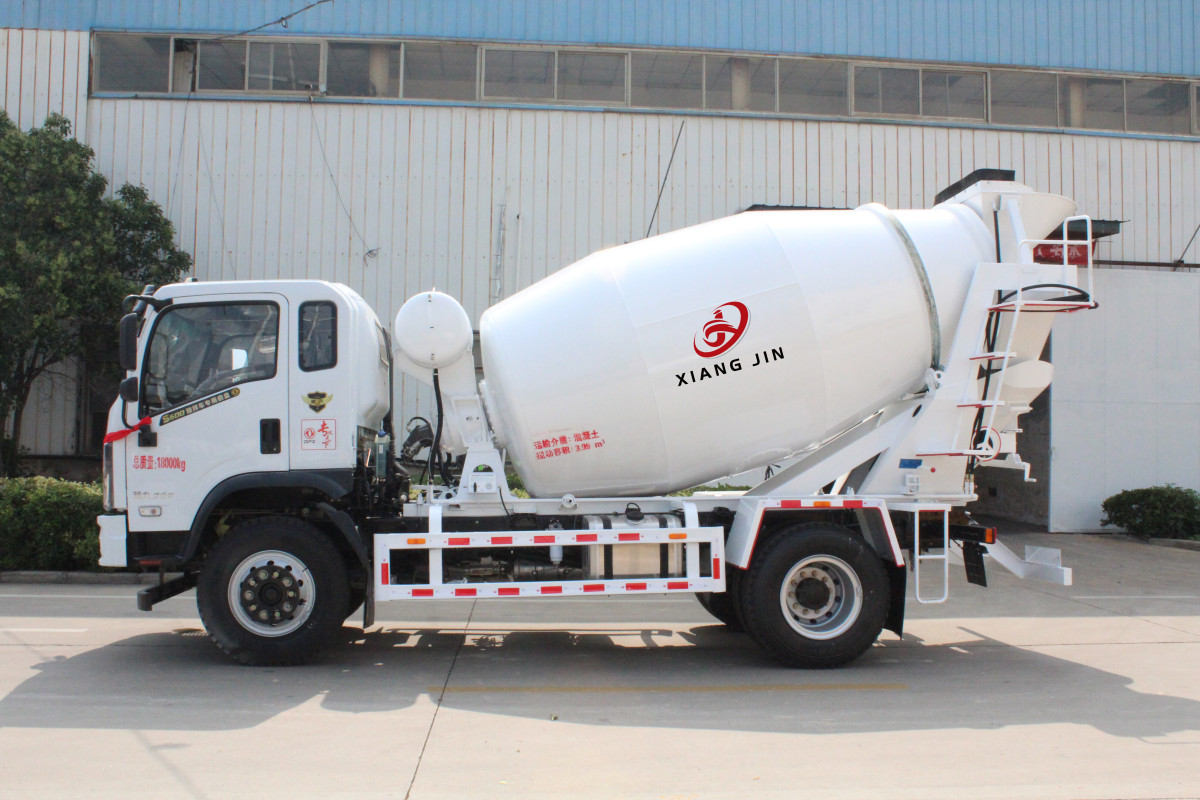
Detailed Explanation of Core Maintenance Items
1. Mixing Tank System
Preventing Concrete Setting:
Before Transportation: Adjust the concrete mix ratio according to the temperature and add antifreeze.
During Transportation: Maintain continuous low-speed rotation of the mixing drum (2-4 rpm).
Upon Arrival at the Site: Confirm the unloading time to avoid excessive waiting time. Tank Cleaning and Maintenance:
After each operation: Thoroughly clean the inside of the tank.
Key areas: Blades, tank opening, discharge chute.
Cleaning tips: Rinsing with warm water is more effective.
Rust prevention: Inspect the anti-corrosion layer on the inner wall of the tank and repair it promptly.
2. Hydraulic Drive System
Hydraulic Oil Management:
Replacement cycle: Replace with low-temperature hydraulic oil before winter (32 or 46 antifreeze hydraulic oil recommended).
Oil temperature control: Preheat the hydraulic system by running it unloaded for 5-10 minutes after startup.
Oil circuit inspection: Inspect all oil pipe joints to prevent low-temperature brittleness.
Hydraulic motor maintenance:
Regular inspection: Check if the motor fixing bolts are loose.
Sealing: Check for oil leaks at the rotary seal.
Noise monitoring: Listen for abnormal sounds during operation.
3. Water System Freeze Protection
Water Tank Freeze Protection:
Draining Principle: The water tank must be drained after operation.
Antifreeze: If not drained, add dedicated antifreeze.
Valve Inspection: Ensure all drain valves are unobstructed.
Water Pump Piping:
Insulation Measures: Install insulation cotton on the water pipes.
Pump Body Protection: The water pump casing can be wrapped with insulation material.
Regular Testing: Test the water system weekly to ensure it is unobstructed.
4. Chassis and Powertrain
Engine Maintenance:
Oil Selection: Change to 5W-30 or 0W-40 low-temperature engine oil
Fuel Management: Use diesel fuel of the appropriate octane rating for the local temperature (-10, -20, -35)
Preheating System: Check and ensure the flame preheating or glow plugs are functioning properly.
Battery Maintenance:
Charge Maintenance: Maintain the battery charge above 75% when the vehicle is parked
Insulation Measures: Install a battery insulation sleeve
Clean Connectors: Clean the terminal tips and apply a special grease to prevent oxidation.
Daily Operation Checklist
Pre-Departure Inspection
Check engine oil, fuel, and coolant
Test hydraulic fluid level and cleanliness
Confirm the water tank is filled or emptied
Check if the mixing tank rotates normally
Test vehicle lighting system
Check tire pressure (cold temperatures can cause tire pressure to drop by 10-15%)
Pre-Loading Preparation
No-Load Preheating: Start the vehicle and run the mixing tank idle for 5 minutes.
Test the unloading mechanism: Check if the discharge chute extends and retracts smoothly.
Confirm water system: Ensure normal water supply.
Precautions during transportation:
Maintain continuous low-speed rotation of the mixing tank.
Monitor hydraulic system pressure (normal range 8-12MPa).
Pay attention to road conditions, avoid sharp turns and sudden braking.
Clean after unloading:
Clean the tank immediately to prevent concrete residue.
Check for wear or deformation of the blades.
Drain all water lines.
Special operating points for winter:
Precautions for different capacity models:
1-3 cubic meter small mixer truck:
Key point: Relatively poor insulation performance, need to shorten transportation distance.
Suggestion: Increase cleaning frequency to prevent rapid heat dissipation from the small-capacity tank.
4-6 cubic meter medium mixer truck:
Key point: High load on the hydraulic system, pay attention to oil temperature monitoring.
Suggestion: Appropriately extend preheating time.
7-8 cubic meter large mixer truck:
Key point: High starting torque requirement, ensure battery is in good condition.
Suggestion: Consider installing an auxiliary heating device.
Temperature grading Management Strategies
0℃ to -5℃: Routine winter operation. Monitor concrete setting time. Drain water lines when parking at night.
-5℃ to -15℃: Antifreeze concrete must be used. Vehicles must be equipped with auxiliary preheating. Shorten maximum transport time.
Below -15℃: Operation is recommended to be suspended. If operation is necessary, special insulation measures must be taken. Each vehicle should be equipped with emergency heating equipment.
Regular Deep Maintenance Items
Weekly Inspection
Comprehensive inspection of hydraulic lines for leaks. Test all safety devices (overload protection, limit switches). Clean radiator to ensure good heat dissipation.
Monthly Maintenance
Replace or clean hydraulic oil filter element. Check wear on agitator blades. Test all valves in the water system. Tighten all bolts in critical areas.
Pre-Winter Special Maintenance
Complete replacement of winter oils (engine oil, hydraulic oil, gear oil). Check heating system effectiveness. Inspect and repair internal anti-corrosion coating of tank. Complete inspection of all pipelines. Check for low-temperature embrittlement.
Emergency Handling Plan
Common Problems and Quick Solutions
Problem 1: Concrete begins to solidify in the tank.
Immediately return to the mixing plant; do not forcibly unload.
Try adding warm water and rotating the tank.
If solidified, contact a professional cleaning team.
Problem 2: Water system freezes.
Use a hot air gun or warm water to slowly thaw.
Direct heating with an open flame is strictly prohibited.
After thawing, check for pipe ruptures.
Problem 3: Abnormal hydraulic system pressure.
Immediately stop operation.
Check if the hydraulic oil is too thick.
Check if the filter element is clogged.
Professional Advice
Establish a winter maintenance file to record the special conditions of each vehicle.
Maintain communication with the concrete supplier and adjust the concrete formula according to the weather.
Specialized driver training to improve winter operation awareness and emergency response capabilities.
Prepare a winter emergency kit: including anti-skid chains, a jump starter, heating equipment, etc.
Safety Tips: Safety is always the top priority when operating concrete mixer trucks in winter. Regular maintenance is not only a requirement for equipment but also a responsibility for every operator. Do not lower operating standards in cold weather; safety awareness must be "raised and maintained"!
Leave A Reply
We specialize in Aerial work platform truck, Concrete mixer truck, Truck crane, Concrete mixer Drum, Spider crane, Dumper truck, Road sweeper, Laser levelling machine, Pneumatic crane, Wheel loader and so on.
Contact
Get a Quote